The Smart Way to Handle Wisdom Teeth: What to Expect from an Expert Removal
Nov 02, 2026
Promo:
Blog:
Wisdom teeth have a reputation for causing trouble, but having them doesn’t automatically mean they need to come out. Some emerge normally and never cause a problem. Others become trapped beneath the gums, grow at an angle, or only partially emerge.
The smart approach is knowing which situation you’re dealing with before problems develop.
At St. Tammany Periodontics & Implants in Covington and Slidell, Louisiana, our team evaluates wisdom teeth carefully and recommends removal when it’s appropriate for your oral health.
Wisdom teeth, also called third molars, usually emerge during the late teens or early 20s. By then, there may not be enough room at the back of your mouth to accommodate them.
When a wisdom tooth can’t emerge completely, it’s considered impacted. An impacted tooth may remain under the gum or come through only partially, creating areas where bacteria and food can collect.
Problems associated with impacted wisdom teeth can include:
You might also notice tenderness or swelling near the back of your mouth or difficulty opening your mouth comfortably.
But symptoms don’t tell the whole story. An impacted wisdom tooth can sometimes create problems before you realize anything is wrong.
If your wisdom teeth have emerged fully, are healthy and functional, and can be cleaned properly, removing them may not be necessary.
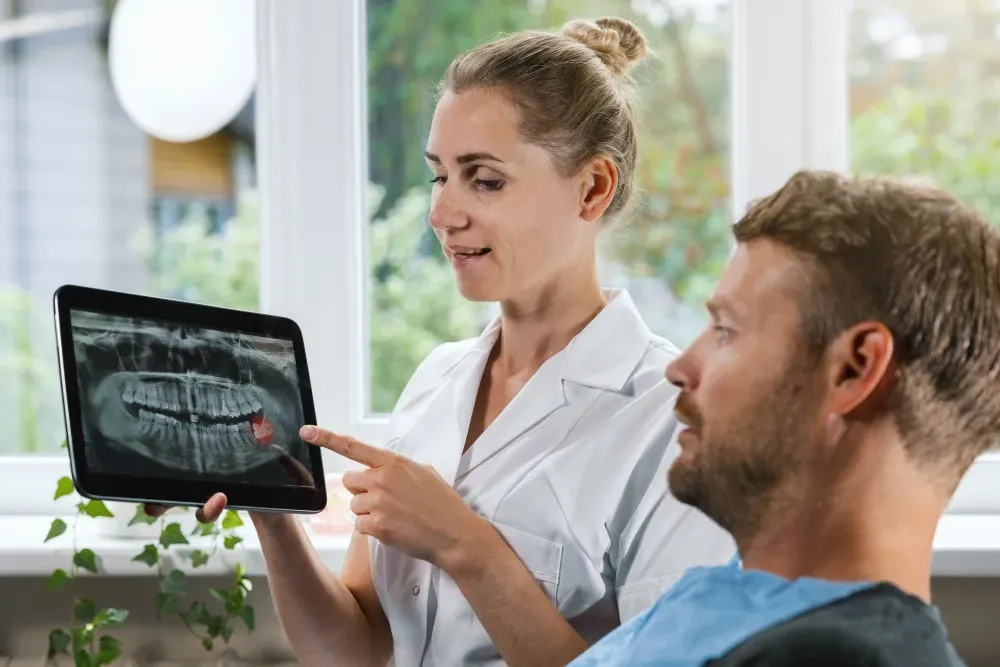
At St. Tammany Periodontics & Implants, we use advanced 3D imaging to see the position and development of your wisdom teeth and their relationship to the surrounding structures. If a tooth isn’t causing problems and appears healthy, we can monitor it.
If we find infection, gum disease, damage, or another concern, we can discuss whether removal is the better choice.
Knowing what to expect can make the procedure feel much less intimidating.
We begin by numbing the area with local anesthetic. Sedation may also be available when appropriate to help you stay relaxed and comfortable.
If the wisdom tooth is impacted beneath the gum, we may make a small opening in the gum tissue to reach it. In some cases, dividing the tooth into smaller sections allows us to remove it more easily. We then clean the area and use dissolvable sutures when needed.
Your exact procedure depends on your wisdom tooth’s position and how much has emerged.
Some swelling and discomfort are normal after wisdom tooth removal. We give you detailed instructions for caring for the area while it heals.
For the first few days, that generally means resting, choosing soft foods, and being gentle around the removal site. Avoid smoking and drinking through straws, which can interfere with the blood clot that protects the area as it heals.
Contact us if discomfort suddenly becomes severe or worsens after initially improving, or if you develop persistent bleeding, fever, worsening swelling, or signs of infection.
Following your aftercare instructions closely can help protect the healing area and reduce your risk of complications such as dry socket.
You don’t have to wait until a wisdom tooth becomes uncomfortable to find out whether there’s a problem. An evaluation can show us whether your wisdom teeth are developing normally, need monitoring, or would be better removed.
If you’re concerned about your wisdom teeth, call us at St. Tammany Periodontics & Implants in Covington or Slidell to schedule an evaluation. We can take a closer look and help you decide what makes sense for your oral health.